
Companies House ID Verification: What You Need to Know
From 18 November 2025, all company directors and Persons with Significant Control (PSCs) will be required to verify their identity with Companies House. This is

Recent media reports are warning of potential tax rises ahead — and for many business owners, landlords, and high-net-worth individuals, that means it’s a good time to review your plans.
While no changes are confirmed yet, speculation is mounting around how the next Budget could attempt to raise revenue. As your trusted accounting partners in Northern Ireland, we wanted to walk you through what might be on the horizon — and what steps you can take now to protect yourself.

The UK Government has announced a wide-ranging plan to support small businesses, outlining a series of measures aimed at tackling long-standing challenges and helping smaller firms to grow.
The plan has been welcomed by leading professional bodies, including the Chartered Institute of Management Accountants (CIMA) and the Institute of Chartered Accountants in England and Wales (ICAEW), as an important step toward strengthening the UK’s small business economy.

New figures from the Office for National Statistics (ONS) show signs that the UK labour market is continuing to cool.
For the three months to June, unemployment rose slightly to 4.7%, the highest in four years, while average pay growth slowed from 5% to 4.6% including bonuses. Excluding one-off payments, pay remained flat at 5%, suggesting that employers are scaling back incentive-based rewards as budgets tighten.

HMRC has launched a new letter campaign targeting companies that may have miscalculated corporation tax marginal relief on their recent returns.
Businesses receiving one of these letters must respond within 30 days, even if they believe their calculations are correct. Failure to do so could result in a formal compliance check and potential penalties.

Chancellor Rachel Reeves is set to deliver her Autumn Budget on 26 November 2025. With borrowing at a five-year high and public finances under pressure, speculation is growing about which tax changes may be announced to raise revenue.
While nothing will be confirmed until Budget Day, it’s worth considering the areas most likely to affect individuals and businesses here in Northern Ireland.

At Exchange Accountants, we’re proud that a recent client survey showed 99% of our clients would be happy to recommend us to family and friends. For us, this is more than just a statistic — it’s a reflection of the relationships we’ve built and the trust our clients place in us.

In business, financial risks don’t always appear on the surface. Sometimes they hide in the detail — and if left unchecked, they can grow into serious problems that affect profitability, compliance, or even a company’s survival. This is where forensic accounting comes into play.

For small and medium-sized enterprises (SMEs) across Northern Ireland, the business landscape is changing faster than ever. Rising costs, shifting trade rules, and an increasingly competitive marketplace mean that business owners need more than annual accounts to stay ahead — they need real-time financial insight.
That’s where digital accounting comes in.

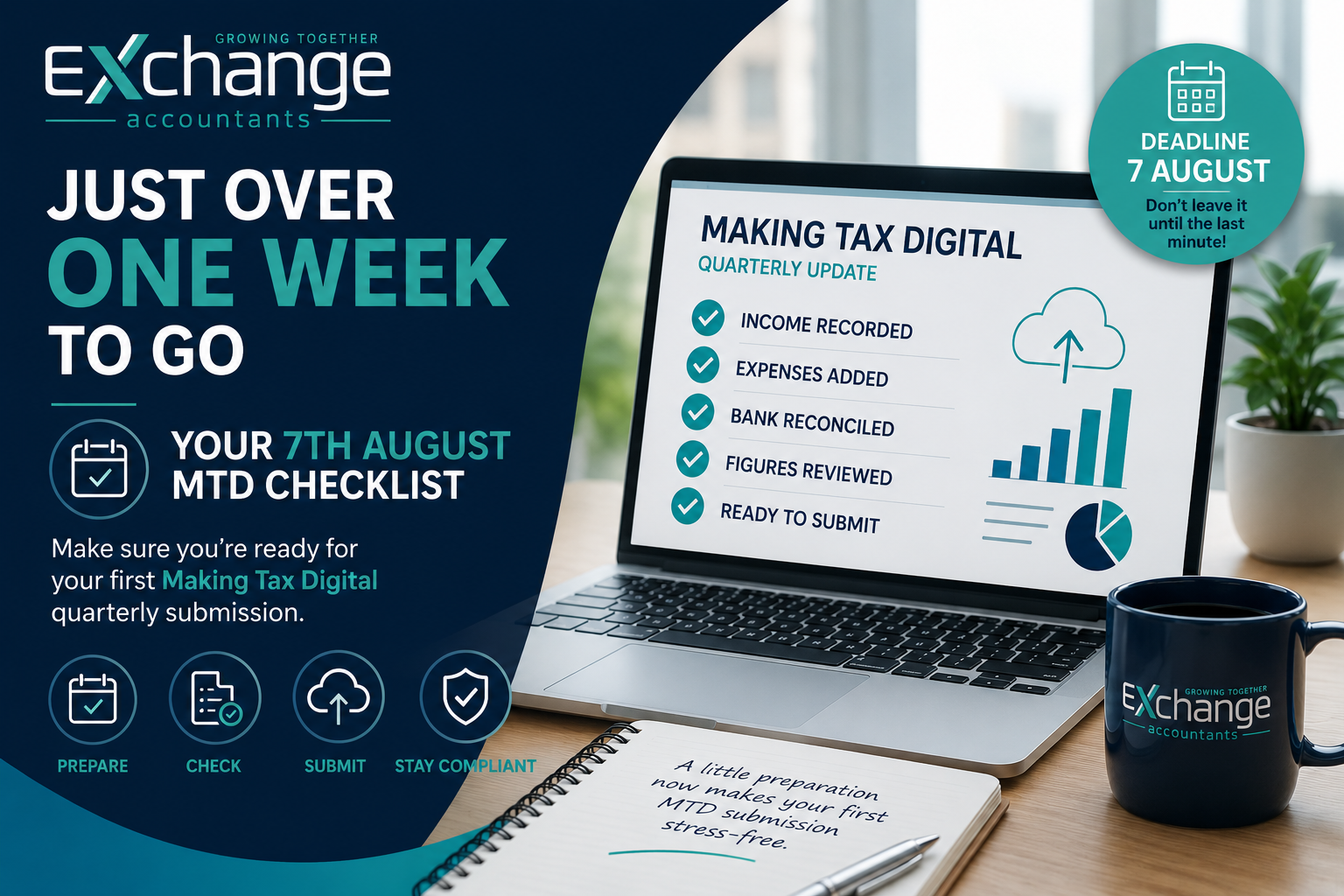
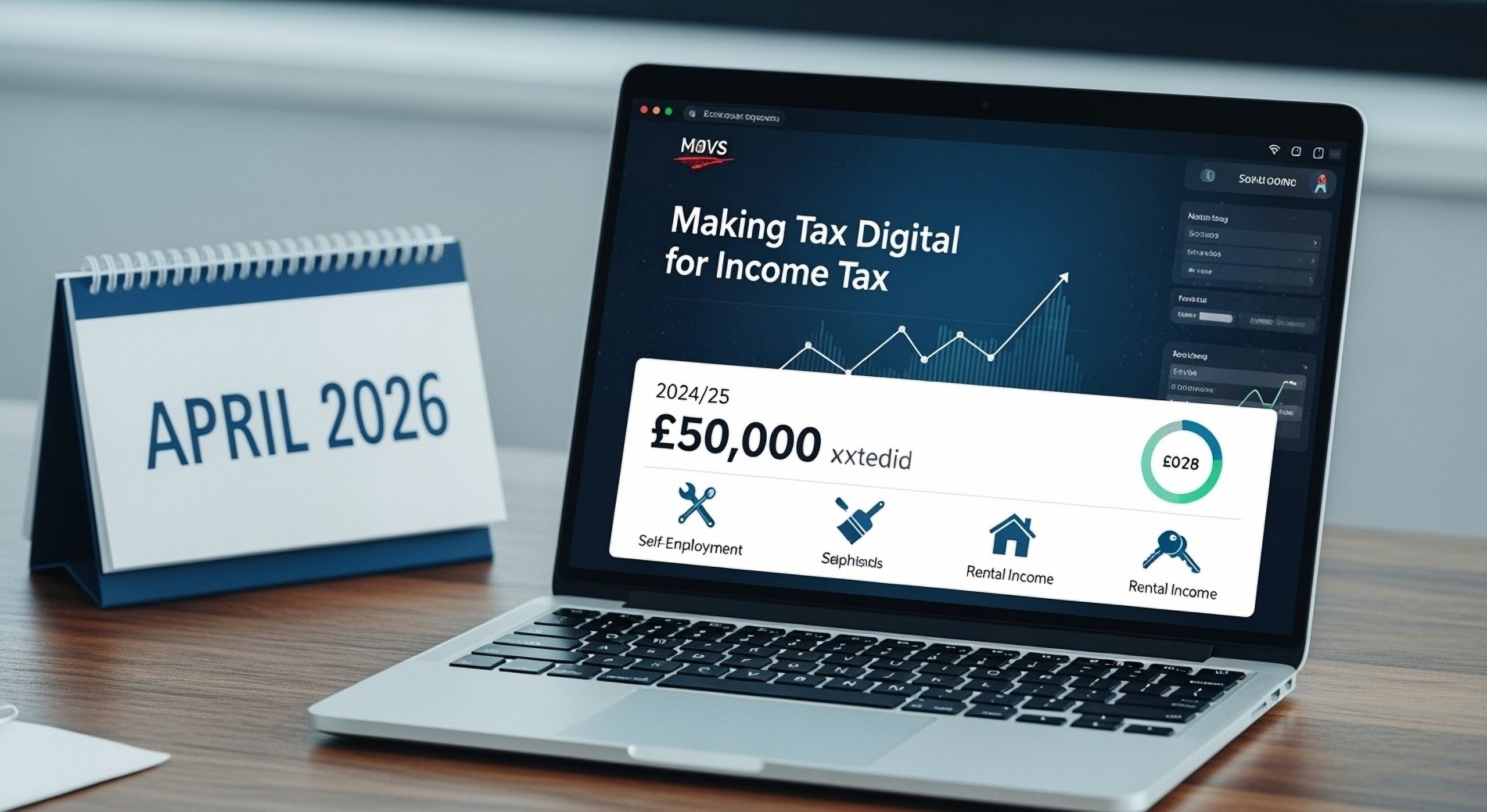
HMRC’s Making Tax Digital (MTD) for Income Tax is coming — and it will affect thousands of people in Northern Ireland. From April 2026, sole traders, landlords, and certain partnerships with turnover above the threshold will have to keep digital records and send quarterly updates to HMRC using approved software.

At Exchange Accountants, we are advising clients to review their inheritance planning following significant changes to the way pension savings are treated for inheritance tax (IHT).
Chancellor Rachel Reeves confirmed in the last autumn Budget that unspent pension pots will now form part of an individual’s estate for IHT purposes, regardless of age at death.
This is a major shift away from previous rules, where pensions could usually be passed on tax-free if the deceased was under 75.

From April 2026, Making Tax Digital for Income Tax (MTD ITSA) becomes mandatory for thousands of individuals — including landlords and sole traders — with combined turnover over £50,000. While that may seem far off, nine months is not a long time when it comes to updating systems, learning new processes, and becoming fully compliant.

The UK Government’s latest defence strategy, unveiled by Sir Keir Starmer, outlines an ambitious and expansive vision for the country’s armed forces — but it also raises big questions about how it will be funded and what trade-offs may lie ahead for the wider economy, taxpayers, and business owners.

Making Tax Digital (MTD) for Income Tax is on the horizon — and for many individuals, the first compliance deadline is fast approaching.
If you’re self-employed, a landlord, or have a combination of qualifying income sources, you may be required to join the scheme from April 2026. In this article, we’ll break down who is affected, what “qualifying income” means, and how to work out if you’re in scope.

Making Tax Digital (MTD) for Income Tax is the most significant change to the UK tax system in a generation. Designed to modernise tax reporting and reduce errors, it marks a shift away from annual tax returns to a more real-time, digital-first approach.
If you’re a sole trader, landlord, or self-employed individual, this change could affect how you run your business, manage your records, and interact with HMRC.
Here’s what you need to know.